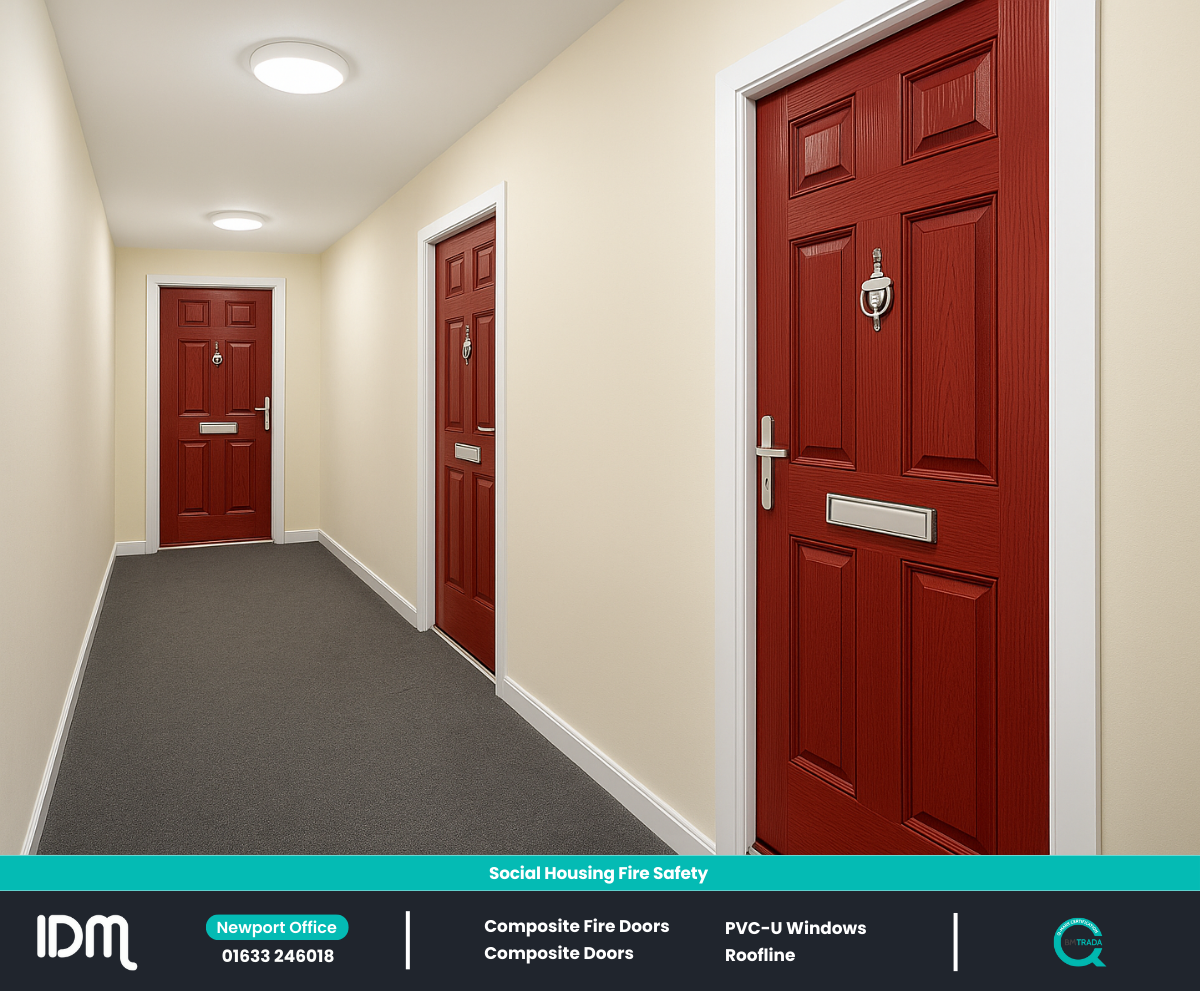
Social Housing Fire Safety: Why Doors are the First Line of Defence
As we move into 2026, the social housing sector finds itself at a critical crossroads. The legislative shifts of the past few years have transitioned from “new requirements” to “established expectations.” For local authorities and housing associations, the grace period for understanding the Building Safety Act and updated Fire Safety Regulations is over. Today, the focus is squarely on execution, data transparency, and the physical integrity of the building’s compartmentation.
While fire suppression systems, heat sensors, and smart monitoring are vital components of a modern safety strategy, the most fundamental element remains the humble fire door. In social housing, a fire door is never just a door; it is a precision-engineered life-safety device that serves as the literal and metaphorical first line of defense for residents.
The Evolution of Social Housing Fire Safety
The landscape of Social Housing Fire Safety has shifted from a reactive model to a proactive, evidence-based discipline. In 2026, the “Golden Thread” of information is no longer a buzzword—it is a mandatory requirement. This means every fire door within a scheme must have a traceable history, from manufacture and fire-rating certification to the specific credentials of the person who installed it.
When we look at the statistics of fire spread in multi-occupancy buildings, the failure often isn’t the absence of a safety strategy, but the failure of compartmentation. If a fire breaks out in a single flat, the fire door’s job is to contain that fire for a minimum of 30 minutes, allowing the “stay put” policy to remain viable or providing a safe corridor for evacuation. If that door fails, the entire building’s safety architecture collapses.
Why Fire Doors are the Weakest Link
Despite their importance, fire doors are often the most abused assets in a social housing portfolio. Unlike a smoke detector that sits on a ceiling, a door is a moving part. It is opened and closed thousands of times a year, propped open by residents, slammed by heavy furniture, and often subjected to DIY “repairs.”
Common failures that compromise safety in 2026 include:
-
Incorrect Hardware: The use of non-fire-rated hinges or handles during routine maintenance.
-
Excessive Gaps: Smoke is the primary cause of fire-related fatalities. A gap between the door and the frame allows cool smoke to bypass the door long before the intumescent seals even have a chance to heat up and expand.
-
Illegal Alterations: Residents often unknowingly compromise their own safety by trimming doors to fit new carpets or painting over intumescent strips.
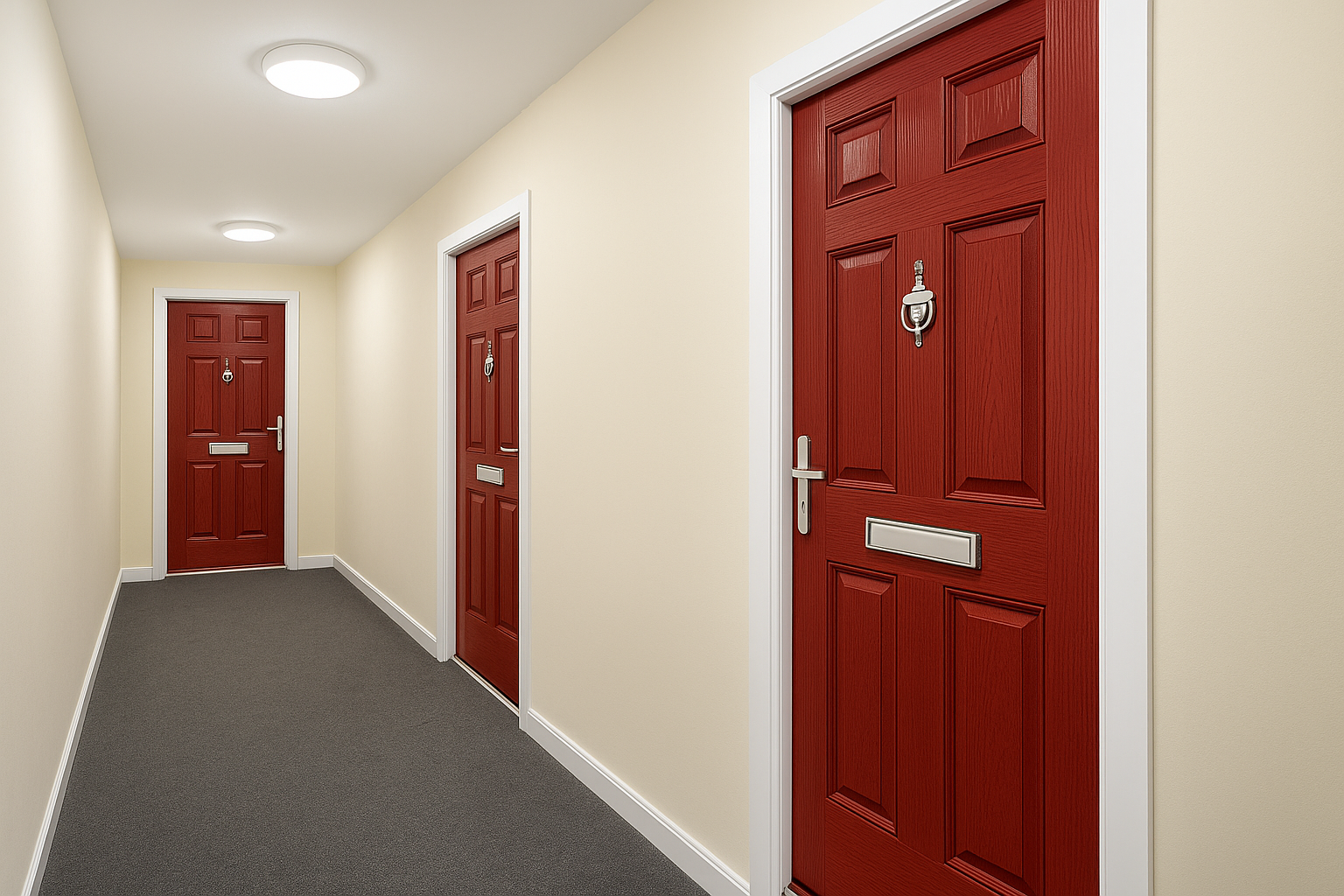
The Move Toward Replacement Composite Fire Doors
In 2026, many providers are moving away from traditional timber doors in high-wear areas in favour of advanced replacement composite fire doors. These units offer a dual benefit: they provide the rigorous fire and smoke resistance required by modern standards, while also offering significantly better thermal performance and security.
For a Housing Association, the ROI on a high-quality composite fire door is found in its durability. High-specification composites are engineered to withstand the rigors of social housing environments while maintaining their structural integrity and fire-rating for their entire service life.
Beyond the Door: A Holistic Envelope Approach
At IDM Doors, we understand that fire safety doesn’t exist in a vacuum. A fire door is part of a wider building envelope that includes PVC-U windows, roofline, and communal entrance systems. A failure in any one of these areas can create a “chimney effect” or allow external fire spread.
When we partner with clients, we look at the lifecycle of the asset. It isn’t just about the installation on day one; it’s about ensuring that the product is fit for purpose for the next 20 years. This involves rigorous resident engagement to explain why these doors must be treated differently than standard internal doors and why regular inspections are a legal necessity, not a choice.
Conclusion: Compliance vs. Safety
There is a distinct difference between being “compliant” on paper and being “safe” in reality. Compliance is a checkbox exercise; safety is a culture. In 2026, as the scrutiny on Social Housing Fire Safety intensifies, the providers who succeed will be those who view their fire door programs not as a capital expenditure burden, but as the most essential investment they can make in resident welfare.
If your current fire safety strategy relies on doors that haven’t been audited in the last year, or if your data thread is broken, now is the time to act. A door is just a commodity until it’s the only thing standing between a resident and a tragedy. Don’t leave your safety strategy to chance.




Leave a comment